Skip to main navigation menu Skip to main content Skip to site footer

##common.pageHeaderLogo.altText##

About

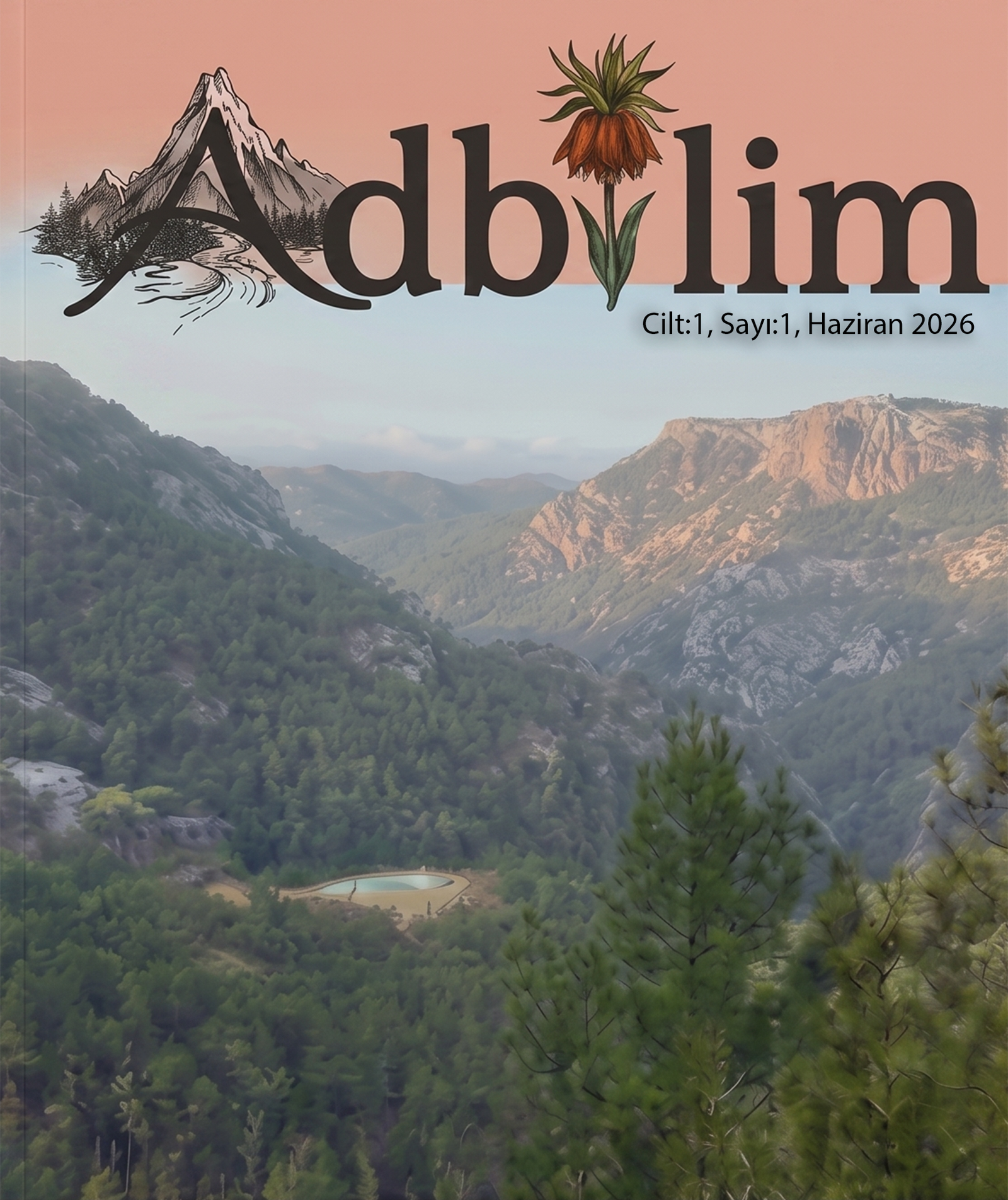
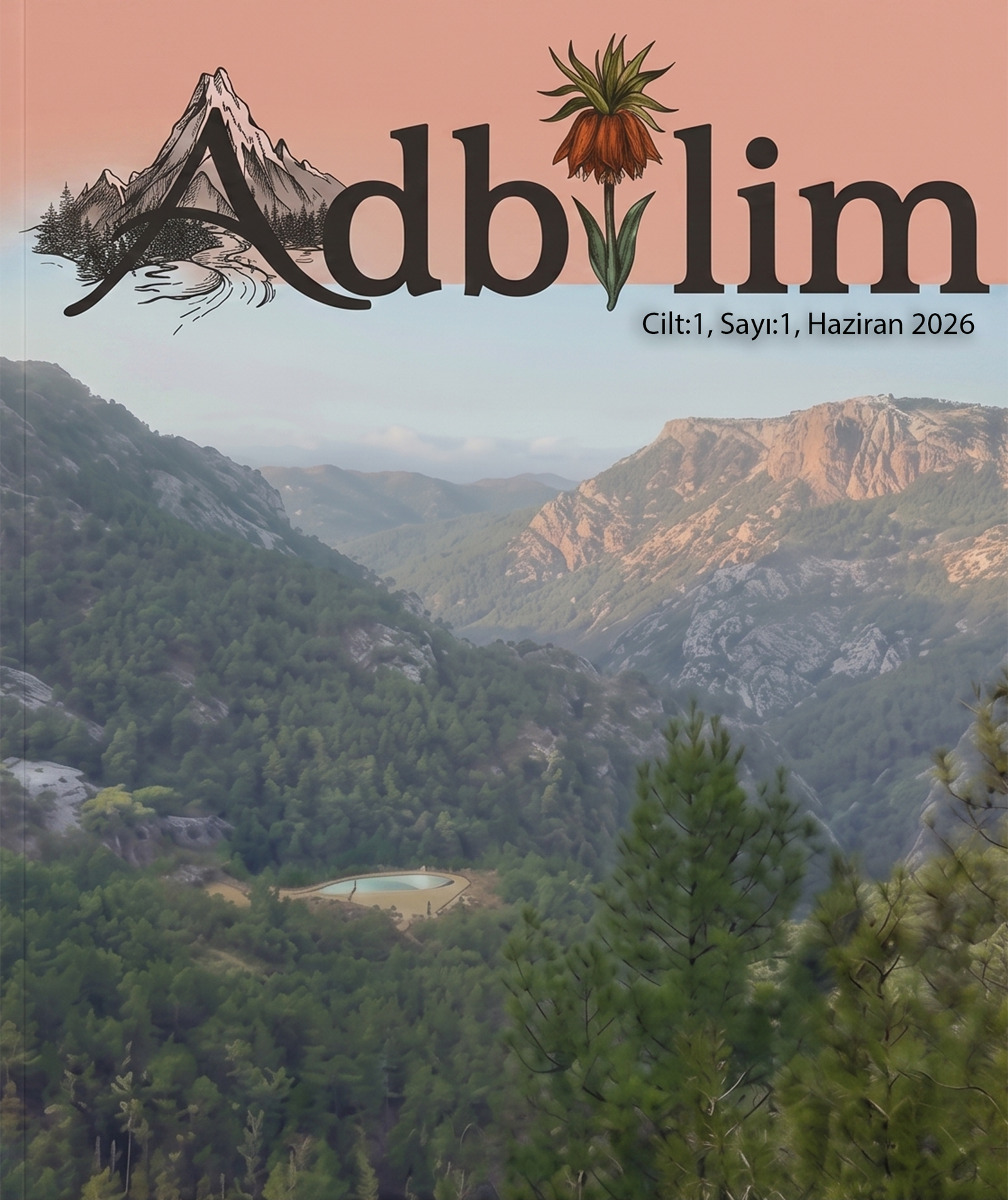
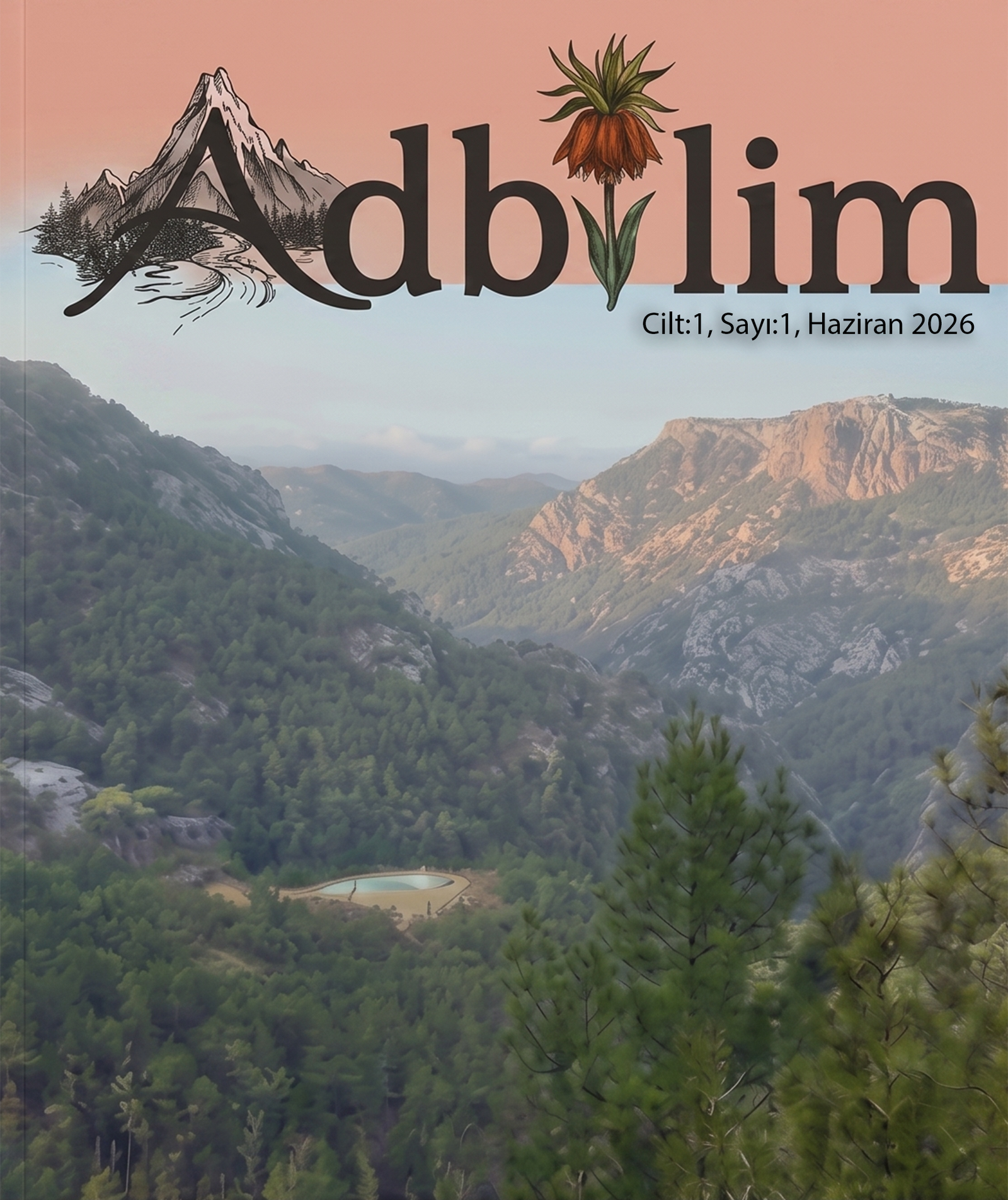
Adbilim, an official publication of the Ad Derneği (Name Society), is an international, peer-reviewed, and open-access scientific journal that publishes original and high-quality research in the field of onomastics. The journal features theoretical and applied studies investigating the origins, morphological structures, and naming traditions of all types of proper names (including toponyms, anthroponyms, ethnonyms, and others) shaped by historical and contemporary Turkic dialects. Furthermore, the journal equally welcomes comparative research on naming processes across diverse languages and cultures, as well as interdisciplinary studies analyzing onomastic data. Adhering strictly to the double-blind peer-review principle, Adbilim is published biannually and imposes no article processing charges (APCs) or fees of any kind on its authors.

Adbilim accepts original research articles in Turkish and English. 

Read More

Current Issue

Volume 1, No. 1June

Published June 30, 2026

Research Article

  1. The “Aktav Tatars” in Ottoman Records: Their Identity, Migrations, Homeland, and Relations with the Aktaghliks and Karataghliks of Eastern Turkestan

    This article examines when the Aktav people, referred to in Ottoman documents as Tataran-ı Aktav, Aktav Tatars, or Aktav Yörüks—a group whose name suggests Kipchak origins—arrived in Asia Minor, where they left their mark in Anatolia and Rumelia. It also examines their previous homelands, and the traces they left behind. To this end, toponymy dictionaries, history books, and modern historical studies have been utilized. This study concludes that the Aktav people arrived in Anatolia in 1395, fleeing the Golden Horde during the war between Toktamish and Timur. In a subsequent period during the reign of Mehmed I, they were likely relocated to the Balkans, where they established settlements bearing their own name. Unlike what has been previously thought, the name Aktav does not originate from the name of the Aktav Bey (khan) who led the migration; rather, it comes from the name of the tribe. The settlements bearing the name Aktav in northwest Kazakhstan are considered their ancestral homeland. Besides, the Aktav-Kanlı tribe in Bashkortostan is interpreted as their ancestors. These observations are presented as evidence of this study’s argument. Furthermore, it has been concluded that the Aktav and Karatav tribes (in Bashkortostan) originated from the Tav tribe (in the Aral-Syr Darya region). The reality that the Aktavs migrated to Anatolia while the Karatav remained behind during the Timur-Toktamish war has been interpreted as indicative of a possible fratricidal conflict between these two groups. Based on this possibility, the article also opens a discussion on the origin of the names of the Aktaglık and Karataglık, rival sects/brotherhoods that emerged in the Bukhara region and were supporters of the civil war in the history of East Turkestan (16th-17th centuries).
  2. Turkish Personal Names in Villages with Mezraas Across the Ruha Sanjak (16th Century)

    The Turkish personal names examined in this article are identified from the detailed cadastral registers of the Ruha sanjak compiled in 1518, 1540, and 1566. The toponyms and anthroponyms in the 1518 register largely date back to the Akkoyunlu period, whereas the personal names in the 1540 and 1566 registers comprise historical Turkish names bestowed during the Ottoman era. This study investigates the use of Turkish personal names among the inhabitants of villages with mezraas in the Ruha sanjak during the 16th century. Out of the 87 villages with mezraas in the region, Turkish personal names were identified in 80 cases. One village was deserted, and no Turkish personal names are observed in the remaining six. The term "Turkish personal names" encompasses both purely Turkish names (Aydoğmuş, Gündoğmuş, Avşar, Durmuş, Doğan, Kurt, Verdi, Tatlugeldi, Sevindik, Yağmur, Tanrıverdi, Ulaş, and Kürşad) and compound names incorporating Turkish linguistic elements (Allahverdi, Hüdaverdi, Şahverdi, Hızırca, Alihan, Şahkulu, and Demgeldi). Our findings reveal that the residents of these villages utilized 163 distinct Turkish personal names. Ultimately, this article demonstrates that Turkish elements were widely employed as the names of village, mezraas, and personal nouns across the Ruha sanjak during the 16th century.

  3. Urbanonyms in the Modern Onomastic System: Theoretical Approaches and Terminological Boundaries

    The article deals with theoretical foundations, functional characteristics, and place of urbanonyms in the onomastic system. Urbanonyms, as proper names of intracity objects - streets, avenues, squares, neighborhoods, and other objects - are not merely nominative units, they are also a system of signs that have social, cultural and ideological content. The study shows that urbanonyms, as a main component of urban vocabulary, play a significant role in forming the city's figurative and geographical image. They are widely studied by various scientists. The reason for this is the noticeable increase in interest in the city, which has been perceived as a social, cultural and mental phenomenon in recent decades. The purpose of the study is to examine the position of the term “urbanonym” within the onomastic system and to assess its usage in the scholarly literature. For this purpose, existing theoretical approaches are analyzed, the functional features of urbanonyms are systematized, and their differences from other onomastic units are substantiated. In the article, foreign and domestic studies devoted to the concept of urbanonyms are systematized, and existing approaches in this area are compared. It concludes that urbanonyms are not only a subcategory of toponyms but also an interdisciplinary phenomenon uniting various onomastic fields. This study suggests that such a conceptualization expands the prospects for the development of urbanonymy as a research field.

  4. Female Names in the Province of Rum

    In recent years, studies on women's history have gained significant momentum. However, accessing archival sources regarding women, who constitute a fundamental element of history, still poses various challenges. While the male population paying taxes and performing military service was recorded alongside their patronymics in Ottoman archival documents, registering women was generally deemed unnecessary by Ottoman officials. Consequently, the women who managed to leave their mark on history were usually members of the elite class, such as the wives of sultans, princes, viziers, and beys. Their inclusion in cadastral surveys (tahrir) occurred predominantly through the endowment foundations (waqf) they established or the registration of their properties. The primary source of this study, the rum waqf register (rum evkaf defteri), is registered under number 388 (new number 583) in the Archive of the General Directorate of Land Registry and Cadastre in Ankara. Beginning with the monogram of Sultan Murad III, the register dates back to 1576 and consists of 143 folios containing numerous inserts and marginal notes. In the 16th century, the center of the Rum Eyalet was Sivas, and this significant register encompasses prominent districts like Merzifon, Amasya, Tokat, and Samsun. The intense concentration of waqf records can be explained by Çelebi Mehmed granting state land (mîrî) as private property during the interregnum to seize the throne. The most frequently encountered female name in the register is Ayşe. Prominent among them is Ayşe Hatun, the daughter of Mahmud Çelebi and granddaughter of Mehmed Çelebi, whose name appears in 17 instances alongside her patronym. Following Ayşe Hatun, the most recorded names are Melike Hatun and Sitti Şah Hatun. For some women, their husbands or fathers are explicitly stated; for instance, Bülbül Hatun is identified as the mother of Şehzade Murad. The register contains a total of 190 distinct female names, including Alemşah Hatun, Anber Hatun, and Benefşe Hatun. Consequently, investigating female names in archival documents will significantly contribute to illuminating numerous genealogical lineages and historical personalities.

  5. The Use and Semantic Features of the Word ‘Bay’ in Kazakh Personal Names

    The article examines the etymology, meanings, and usage of the word bay across Turkic languages from a comparative perspective. Using linguistic data and historical evidence, it demonstrates that bay has long played an active role in the formation of Kazakh male personal names and gradually developed into a national model of anthroponomic formation. The findings show that the term bay in Kazakh anthroponyms revolve around two main structural patterns. The study concludes that from the early twentieth century onwards, Soviet ideology and literature significantly contributed to the emergence of negative connotations associated with the word bay. Examples from Kazakh literary works illustrate this process. It is known that the tradition of creating names for negative character types with bay as the second component survives today; and this process is shaped by social, psychological, literary, and linguistic factors. Materials used in this research include epic texts, folklore narratives, classical and contemporary Kazakh literary works, dictionaries, and population census data. The study utilizes comparative, historical, descriptive, and componential analysis methods. The discussion and conclusion argue that the semantic deterioration of bay reflects not only a linguistic change but also broader ideological and social transformations.

  6. Formative Bases of the Kazakh Anthroponymy

    Kazakh personal names have undergone various stages of evolution from ancient times to the present day, resulting in the formation of an integrated lexical system. This article analyzes the pathways through which these names have survived to the present and examines their etymological foundations. It demonstrates, at the phonemic level, that some variants which have diverged from one another over time originated from a common source in ancient periods. The study suggests that Personal names are presented as a means of expressing the shared historical and cultural connections among contemporary Turkic peoples. In this study attention is also paid to external factors such as the people's worldview, traditions and customs, religion, history, and social environment. The article explores issues of contemporary Kazakh anthroponymy, including the evolutionary development of Old Turkic personal names into their modern forms in Turkic and Kazakh languages, orthographic norms, their conformity to the phonological system of the Kazakh language, and the adaptation of foreign as well as Arabic-Persian names into Kazakh.

  7. Arabic-Origin Kazakh Anthroponymy: Cultural Transmission and Linguistic Transformation

    Personal names, as fundamental building blocks of cultural transmission, are directly shaped by the socio-political and religious transformations experienced by societies. This study analyzes the cultural transmission levels, motivations for social acceptance, and historical linguistic transformations of Arabic personal names, which have secured a deep-rooted place in the Kazakh anthroponymic pool. The objective of the research is to treat Arabic-originated personal names in Kazakh Turkish not merely as ordinary names, but as linguistic artifacts, thereby revealing the dimensions of their intergenerational onomastic transmission. The scope of the study covers a broad historical trajectory extending from the 9th and 10th centuries—when Kazakh society began adopting Islam—to the present day and utilizes popular name data from a period of 30 years (1991–2021) which are obtained from the Bureau of National Statistics of the Republic of Kazakhstan. The study employs different methodical approaches such as historical-linguistic (diachronic) analysis, ethnolinguistic and theolinguistic examination, phonetic transformation analysis, and statistical data evaluation. The findings demonstrate that the religious-spiritual tradition, initiated by the adoption of Islam, has constructed a robust “Islamic memory” within Kazakh society and generated a permanent transformation in cultural identity.

  8. Ethnocide Policies in Western Azerbaijan and Turkish Toponyms Subject to Massacre in the 20th Century

    Batı Azerbaycan zengin ve çalkantılı bir tarihe sahiptir. Güney Kafkasya'da farklı zamanlarda meydana gelen sosyo-politik olaylar, savaşlar ve demografik durumdaki kasıtlı değişiklikler Batı Azerbaycan'ı da etkilemiştir. Tüm bu acı olaylar yer adlarında iz bırakmıştır. 16 Temmuz 1826'da Azerbaycan'ın bölünmesi için başlayan Rusya-İran Savaşı, 1877-1878'de gerçekleşen Osmanlı-Rus Savaşı ve 10 Şubat 1828'de imzalanan Türkmençay Barış Antlaşması sonucunda, Batı Azerbaycan'daki nüfus arasında gerilim artmış ve birçoğu anavatanlarını terk etmek zorunda kalmıştır. 1905-1906'da gerçekleşen Ermeni-Azerbaycan Savaşı da Batı Azerbaycan'da yaygın katliamlara yol açmış ve Azerbaycan Türkleri anavatanlarından sürülmüştür. 1918'de Batı Azerbaycan'da Daşnak Ararat Cumhuriyeti'nin kurulması, Azerbaycan Türkleri için büyük trajedilere neden olmuştur. Tamamen Ermenileştirilmiş olan Daşnak Ararat Cumhuriyeti'nin uyguladığı ulusal ayrımcılık ve etnik temizlik politikası sonucunda, 1918-1920 yılları arasında Azerbaycan Türklerinin yaşadığı 124 yerleşim yeri yıkılarak harabeye dönüştürülmüştür. Ermeni Devleti, 1950'ler-1980'ler arasında Azerbaycan Türklerini Batı Azerbaycan'daki yurtlarından çeşitli şekillerde, "kültürel" yöntemler kullanarak sürgün etmiştir. Bunlar birkaç şekilde gerçekleştirilmiştir: 1) Azerbaycan Türklerinin yaşadığı köyler birleştirilmiştir; 2) Köy sakinleri yeniden yerleştirilmiş ve köy yerleşimi tasfiye edilmiştir; 3) Yerleşimin idari bölgesi, bölge veya şehrin idari bölgesine dahil edilmiş ve köyün adı Ermenistan'ın idari bölgesel birimlerinin bileşiminden çıkarılmıştır.

Biographical Article

  1. The Patriarch of Uzbek Onomastics

    The article discusses the scientific and practical activities of the founder of Uzbek onomastics, Doctor of Philology, Professor Begmatov Ernst Azimovich in the fields of anthroponymy and toponymy. It examines the content of his monographs and dictionaries, as well as his scientific views and interpretations with a special focus on his micro/macro-onomastic formulations (protranstva) regarding proper nouns (onyms), the formation of anthroponyms, anthroponymic indicators and anthroponymic units such as names, surnames, patronyms, nicknames and pseudonyms. By dealing with Azimovich’s views on the spelling of names, the study also analyzes the function of the anthroponymic units.

Opinion Article

  1. The Common Ground of Ecology and Onomastics: Is Ecological Onomastics Possible?

    The fact that the names of biotic and abiotic entities in ecology are also the subject of onomastic studies demonstrates an overlap between two scholarly fields. This study addresses the intersections between ecology and onomastics. It shows that the main branches of onomastics and the subbranches of geoonomastics are quite closely related to the subbranches of ecology. An ecologically centered approach is presented instead of the anthropocentric approach of traditional onomastics studies. In this context, ecological onomastics is proposed as a conceptual framework for onomastics in order to evaluate the names given to other living subjects, in parallel with the names given to individuals, groups, societies, or human communities. As subjects of ecological onomastics, in addition to some topics of general onomastics, names used for ecological units such as ecosystems, habitats, niches, biotopes, and biomes, such as forests, pastures, meadows, highlands, rivers, and lakes, are considered as subject headings. It is argued that ecological onomastics differs from general onomastics in terms of subject matter, approach, and evaluation. This differentiation stems from the fact that ecological onomastics is essentially ecologically centered. Thus, ecological onomastics focuses on tracing the past, present, and changing state of naming culture in addressing ecological problems at various scales, such as contemporary environmental issues, ecological imbalance, and climate change.

Cover and Masthead

  1. Foreword

    Proper nouns are not merely linguistic units used to distinguish the entities they denote from others in communication. They are cultural elements that embody the history of the language in which they are formed, as well as the history, lifestyle, beliefs, customs, and traditions of the nation that uses that language. They are living witnesses to cultural continuity and social memory. Due to these characteristics, onomastics, which has always garnered significant interest, often intersects with various social sciences—such as history, geography, ethnology, folklore, sociology, and anthropology—and even, at times, certain natural sciences.

    General Turkic onomastics has achieved notable successes to date. A large number of researchers investigating almost every corner of the Turkic world, along with a vast body of valuable research produced by them, are among these successes. Alongside these achievements, there are significant shortcomings; foremost among them is the absence of an institution to plan and encourage the collection, analysis, and publication of onomastic materials from a common perspective. Another significant deficiency is the lack of a scientific journal where researchers can discuss the problems of the field and publish their scholarly work.

    Established in İzmir at the beginning of this year, the "Ad Association" was founded as a result of the needs arising from these shortcomings, and the Adbilim journal was launched to serve as the official publication organ of this association.

    Our journal aims to feature theoretical and applied research on the proper nouns (personal names, place names, community names, celestial bodies, flora, fauna, etc.) of Turkic peoples. Furthermore, it will welcome studies that discuss theoretical issues in the field, employ comparative methods to examine naming processes across different languages and cultures, and provide new perspectives through interdisciplinary approaches. We believe that the further development of Turkic onomastics will be possible not only through the collection of data and traditional analysis methods, but also through the advancement of the theories and methods that explain them. Therefore, Adbilim aims to bring together onomasticians working in different countries on a common scientific ground, to evaluate the common onomastic heritage of Turkic peoples from a holistic perspective, and thus to contribute to global onomastics. Our ultimate goal is to be a reputable scientific publication organ where academic freedom is fully exercised, and constructive scientific criticism is transformed into knowledge, without compromising scientific principles.

    On the occasion of our inaugural issue, we would like to express our gratitude to all our members who contributed to the establishment of our association and journal, as well as to the scholars and our editorial board whose research articles and peer-review evaluations have made this issue possible. We wish Adbilim great success in contributing to Turkic onomastics, Turkology, and the international world of onomastics, and we hope for its long-lasting scholarly journey.

    We respectfully greet all our colleagues and readers at this first step of a new venture and journey.

    On behalf of the Ad Association, Prof. Dr. İbrahim ŞAHİN